
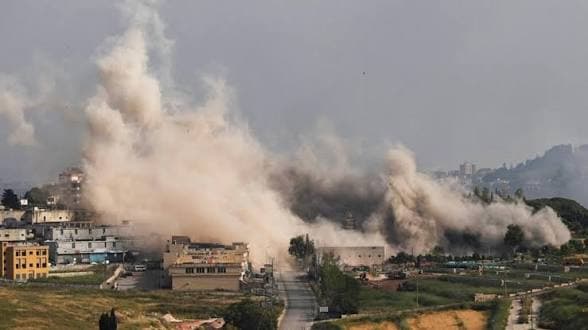
Middle East Brink: Renewed Attacks Dim Hopes for Imminent Ceasefire as Regional Tensions Soar
Prospects for a swift end to the escalating conflict in the Middle East have significantly dimmed, as renewed military assaults by key regional players eclipse ongoing diplomatic efforts. Despite continuous negotiations aimed at achieving a de-escalation, a recent surge in hostilities, including intensified Israeli operations and direct U.S. strikes against Iranian targets, suggests a prolonged and precarious period of instability.
Israel has announced its intention to intensify its military campaign against Hezbollah in Lebanon. This declaration comes amidst a three-month conflict that has seen a dangerous uptick in cross-border exchanges, raising fears of a wider regional conflagration. Israeli officials stated the enhanced operations are necessary to counter Hezbollah's persistent provocations and secure its northern border, indicating a robust response in the face of ongoing threats.
Adding a critical new dimension to the volatile situation, the U.S. military has launched strikes against Iranian boats and missile launch sites. These targeted actions represent a significant escalation, marking direct U.S. military engagement against Iran's naval and missile capabilities. The strikes underscore the international community's concerns over Iran's role in supporting proxy groups that destabilize the region and threaten international shipping lanes, particularly in vital maritime corridors.
Diplomacy Fades Amidst Escalation
This renewed military assertiveness comes at a critical juncture for diplomatic initiatives. Envoys from various nations have been engaged in arduous negotiations, striving to broker a deal that would bring an end to the protracted three-month war. However, the latest wave of attacks threatens to unravel any progress made, casting a long shadow over the feasibility of an imminent ceasefire agreement. The paradox of intensifying conflict alongside concurrent peace talks highlights the deep-seated complexities and mistrust inherent in the regional dynamics.
Analysts suggest that the current military actions, particularly the U.S. strikes, aim to send a strong deterrent message to Tehran and its allied groups, emphasizing the potential consequences of continued aggression. However, such actions also carry the inherent risk of further retaliation, potentially igniting a cycle of escalation that could draw more actors into the fray.
Regional Implications
The deteriorating security situation portends severe implications for regional stability. With Israel poised for deeper engagement in Lebanon and the U.S. taking direct action against Iranian military infrastructure, the possibility of a broader, multi-front conflict looms large. Civilian populations in affected areas face increased displacement and humanitarian challenges, while global energy markets remain sensitive to any major disruption in the Middle East.
The fading hopes for a swift resolution underscore the deeply entrenched nature of the conflict and the profound challenges facing international mediators. As military actions restart and rhetoric hardens, the path towards peace appears increasingly arduous and distant, leaving the region on a knife-edge.