
Palestinians Use Recycling to Combat Trash Crisis
The West Bank has been struggling with a severe trash crisis due to Israeli restrictions, which have limited the access to proper waste management facilities. In response, two Palestinian entrepreneurs have launched a recycling initiative to reduce waste and create jobs. The initiative focuses on collecting and processing plastic, paper, and glass waste, which is then sold to companies in Israel and other parts of the world.
## The Impact of Israeli Restrictions
The Israeli restrictions have had a devastating impact on the environment and economy of the West Bank. The lack of access to proper waste management facilities has led to the accumulation of garbage in streets, fields, and other public areas. This has resulted in health problems, pollution, and a decline in the overall quality of life for Palestinians living in the region.
## A Beacon of Hope
The recycling initiative launched by the two Palestinian entrepreneurs is a beacon of hope for the people of the West Bank. It not only provides a solution to the trash crisis but also creates jobs and stimulates economic growth. The initiative has inspired other Palestinians to take action and work towards creating a more sustainable and environmentally friendly community.
Politics
Palestinians Turn to Recycling Amidst Trash Crisis
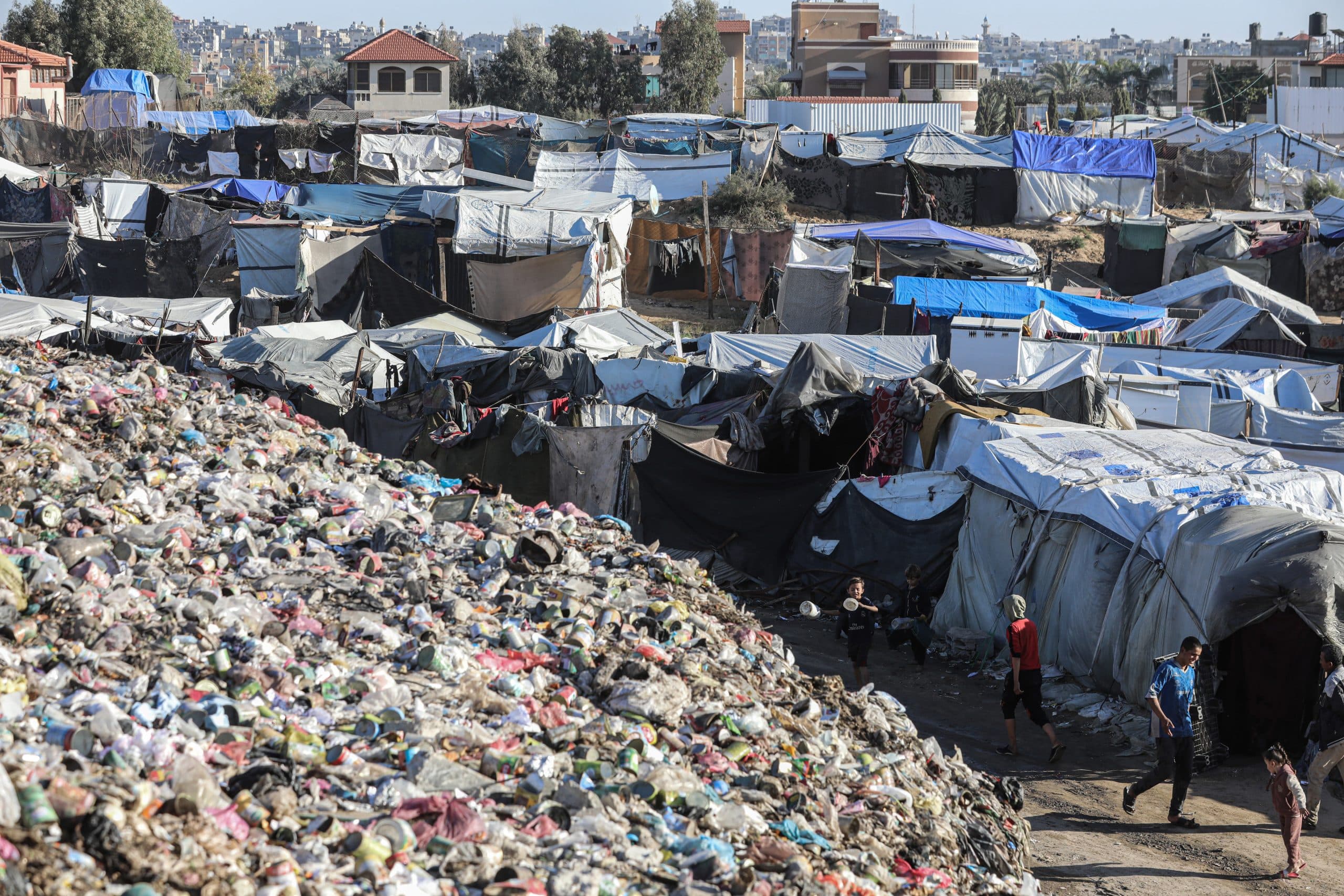
Israeli restrictions have led to a severe trash crisis in the West Bank, prompting two Palestinian entrepreneurs to launch a recycling initiative, aiming to reduce waste and create jobs. The effort is part of a broader movement to address the environmental and economic challenges faced by Palestinians in the region.
Reader FAQs & Key Context
What is the main cause of the trash crisis in the West Bank?
The main cause of the trash crisis in the West Bank is the Israeli restrictions, which have limited access to proper waste management facilities.
How does the recycling initiative benefit the Palestinian community?
The recycling initiative benefits the Palestinian community by reducing waste, creating jobs, and stimulating economic growth, ultimately improving the overall quality of life for Palestinians living in the region.