
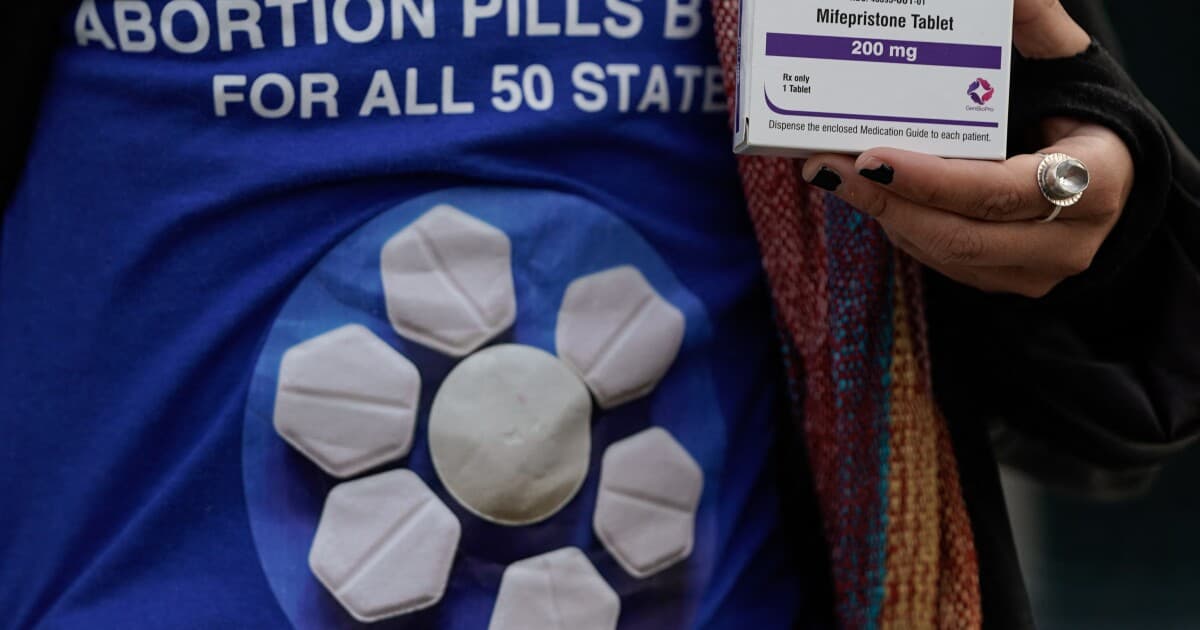
Supreme Court Blocks Mifepristone Restrictions, Maintaining Access for Now
WASHINGTON D.C. – The U.S. Supreme Court has temporarily intervened to maintain widespread access to mifepristone, a commonly used abortion medication, blocking lower court rulings that sought to impose significant restrictions. The high court's decision, issued late Friday, means that the drug will remain available under current regulatory guidelines while legal challenges against its availability continue to unfold.
The ruling is a temporary reprieve for abortion rights advocates and providers, ensuring that mifepristone, approved by the Food and Drug Administration (FDA) over two decades ago, can still be dispensed by mail and prescribed via telehealth. Previous lower court decisions, most notably from the U.S. Fifth Circuit Court of Appeals, had aimed to roll back these provisions, reverting to pre-2016 regulations that would have made the drug far more difficult to obtain.
This latest development preserves the status quo pending further appeals, including an expected full review by the Supreme Court itself. The legal battle originated from a lawsuit filed by anti-abortion groups challenging the FDA's approval and subsequent expansions of mifepristone access, arguing the agency overstepped its authority. The Supreme Court's intervention underscores the complex and highly charged legal landscape surrounding reproductive rights in the post-Roe v. Wade era.
Voters Head to Polls in Key Indiana and Ohio Primaries
INDIANAPOLIS, Ind. & COLUMBUS, Ohio – Concurrent with the monumental legal developments in Washington, voters across Indiana and Ohio are heading to the polls today for their respective primary elections. These contests are pivotal, serving as the initial filtering process for candidates who will compete in the critical November general election.
In both states, voters are casting ballots for presidential delegates, though the nominations for both major parties are largely settled. More significantly, the primaries will determine candidates for numerous federal, state, and local offices. This includes highly anticipated races for the U.S. House of Representatives and the U.S. Senate, state legislative seats, governorships (in Indiana this year), and various county and municipal positions.
Ohio, long considered a bellwether state, and Indiana, a reliably conservative stronghold with pockets of Democratic influence, will offer early insights into voter sentiment and the potential electoral battles ahead. The outcomes of these primaries will shape the slates of candidates for contests that could play a crucial role in determining control of Congress and key state governments. Campaigns have been fiercely fought, with issues ranging from economic concerns and healthcare to education and cultural debates resonating with the electorate.
While distinct in nature, both the Supreme Court's ruling on mifepristone and the primary elections in Indiana and Ohio highlight a nation grappling with profound decisions – from the highest judicial authority shaping personal freedoms to everyday citizens defining their political representation. Each event, in its own sphere, will contribute to the evolving narrative of American governance and society.